
Music Essentials: Bob Dylan 'Highway 61 Revisited'
This album kicked open the doors to countless minds, including that of Bruce Springsteen.

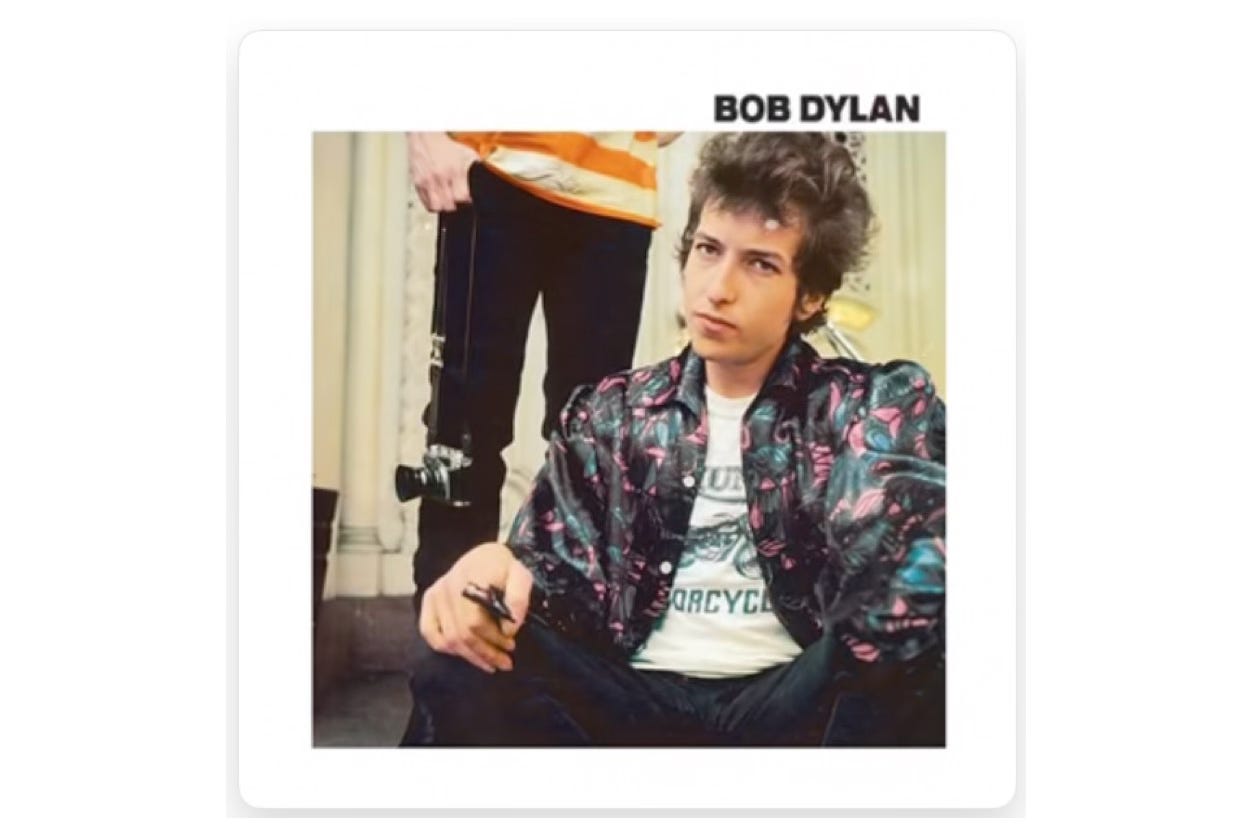
Bruce Springsteen once described the opening note that starts off Highway 61 Revisited as “the snare shot that sounded like somebody’d kicked open the door to your mind.” While there is every possibility that the album Bob Dylan will be remembered for is Blood on the Tracks, I‘m placing my bets on this one. It certainly pushed folk music into the alley and prompted a hundred thousand or so acoustic college folkies to quit school, hire a drummer, find a bass player, and attempt to create meaningful lyrics in order to quick-start their rock careers. In short, this album changed a lot of things. This August marks 60 years after its release, and Highway 61 Revisited remains relevant musically, lyrically and sociologically.
The opening number, "Like A Rolling Stone" works on many levels; it was apparently written about a self-obsessed New York model. Brian Jones of the Rolling Stones felt strongly that the song had been written about him. But Dylan, being the trickster that he is, with the most self-deprecating sense of humor of any of our folk-blues-rockers, may even have been writing about himself; after all, Dylan is the ultimate loner with no direction home. This tune features Mike Bloomfield on guitar, one of the greatest white blues guitarists ever.
The album contains no filler material, something which cannot be said for any other Dylan album. In fact, as Dylan himself commented:
I‘m not gonna be able to make a record better than that one… Highway 61 is just too good. There‘s a lot of stuff on that that I would listen to.
The title track refers to the highway that runs from Minnesota down to New Orleans, and the road was known at the time as The Blues Highway. At the junction of Highway 61 and Highway 49 was where Robert Johnson sold himself to the devil in exchange for his mastery of the blues guitar. The Biblical references, the droll lyrics, the larger-than-life characters, and the raucous beat are an amazing contrast to most of his earlier and his later work; Dylan achieved a unique combination of humor, outrage, and violence that collided in the making of this tune.
"It Takes A Lot To Laugh, It Takes A Train to Cry" was originally conceived by Dylan as "Phantom Engineer", and it doesn‘t take much imagination to see and hear that mystery train racing through the night alongside Highway 61. It‘s a great tune, with some of Dylan‘s easiest and most memorable singing. The lyric lines “I ride the mail train, baby, can’t buy a thrill” are the very lines that inspired Donald Fagen of Steely Dan in his naming of their first album, the classic Can’t Buy A Thrill.
"Just Like Tom Thumb‘s Blues" contain some of the strongest lyrics Dylan has ever written, particularly the closing lines “ I‘m going back to New York City, I do believe I‘ve had enough”. This is folk music turned on its ear.
The masterpiece that closes this album is of course "Desolation Row" and I recall hearing that Dylan claimed the song should be America‘s national anthem: there‘s been a longstanding rumor that the basis for this song is a Duluth lynching of several black circus workers that had occurred during Dylan‘s father‘s youth. The story is unconfirmed, but the lyrics closely parallel the mob hysteria that surrounded the event.
The brilliant acoustic guitar work of Charlie McCoy, closely-miked and played in a Spanish-sounding style, forms the hypnotic instrumentation of this song. At a running time of more than eleven minutes, this song set a standard for extended play that led to Dylan’s 7 minute “Stuck Inside of Mobile With The Memphis Blues Again'“, the 7 1/2 minutes of “Visions of Johanna”, and the 11 minutes of “Sad-Eyed Lady of the Lowlands” on his next album Blonde on Blonde.
Jackson Browne named Highway 61 Revisited as his favorite album of all time. I have to agree. Other than The Beatles' Rubber Soul, what other album from the Sixties still has the power to kick open the door to our minds?